
China was one of the first countries to fully embrace digital payments — but its ecosystem is largely independent of international card networks. You’ve probably heard of Alipay and WeChat Pay. They’re great for street food and convenience stores, and you can link your Visa or Mastercard with no handling fee for payments under 200 RMB (around $30 USD)[^1].
But if you’re buying something pricier — think porcelain or Shu embroidery — or planning a longer stay, or simply want to save a little extra with minimal effort, this guide is for you. I’ll share my personal recommendations, including a setup that can earn you up to 4.4% cashback.
UnionPay Card & App
UnionPay is China’s domestic bank card system and is widely accepted throughout the country. It’s especially useful for larger purchases thanks to its exchange rate and zero transaction fees.
Foreign travellers can obtain a UnionPay card in several ways:
- Some banks issue UnionPay cards, such as Mitsubishi UFJ (MUFG) in Japan.
- You can open an account with the overseas branches of Chinese banks (e.g. Bank of China in Tokyo or Singapore, or ICBC in many countries).
- Some banks within China, such as ICBC, now allow foreigners to open accounts directly.
Suggested Setup 🌟
My ideal setup:
- Alipay / WeChat Pay — Link your Visa/Mastercard. Use for everyday small purchases.
- UnionPay card & app — Use for larger purchases; zero fees, and occasional promotions. (e.g. in early 2026, paying for high-speed rail tickets with UnionPay gave a 50 RMB discount)

You probably won’t need cash. Personally, I haven’t used cash in China in years. If you try to pay with cash at a small café, the staff might look a little puzzled — they may not even have enough change to give you back.
For Frequent Visitors: HSBC HK
If you’re planning a longer stay or frequent visits to China, you might want to consider an international bank such as HSBC. It’s widely used by British travellers and businesses, and has branches in many major Chinese cities.
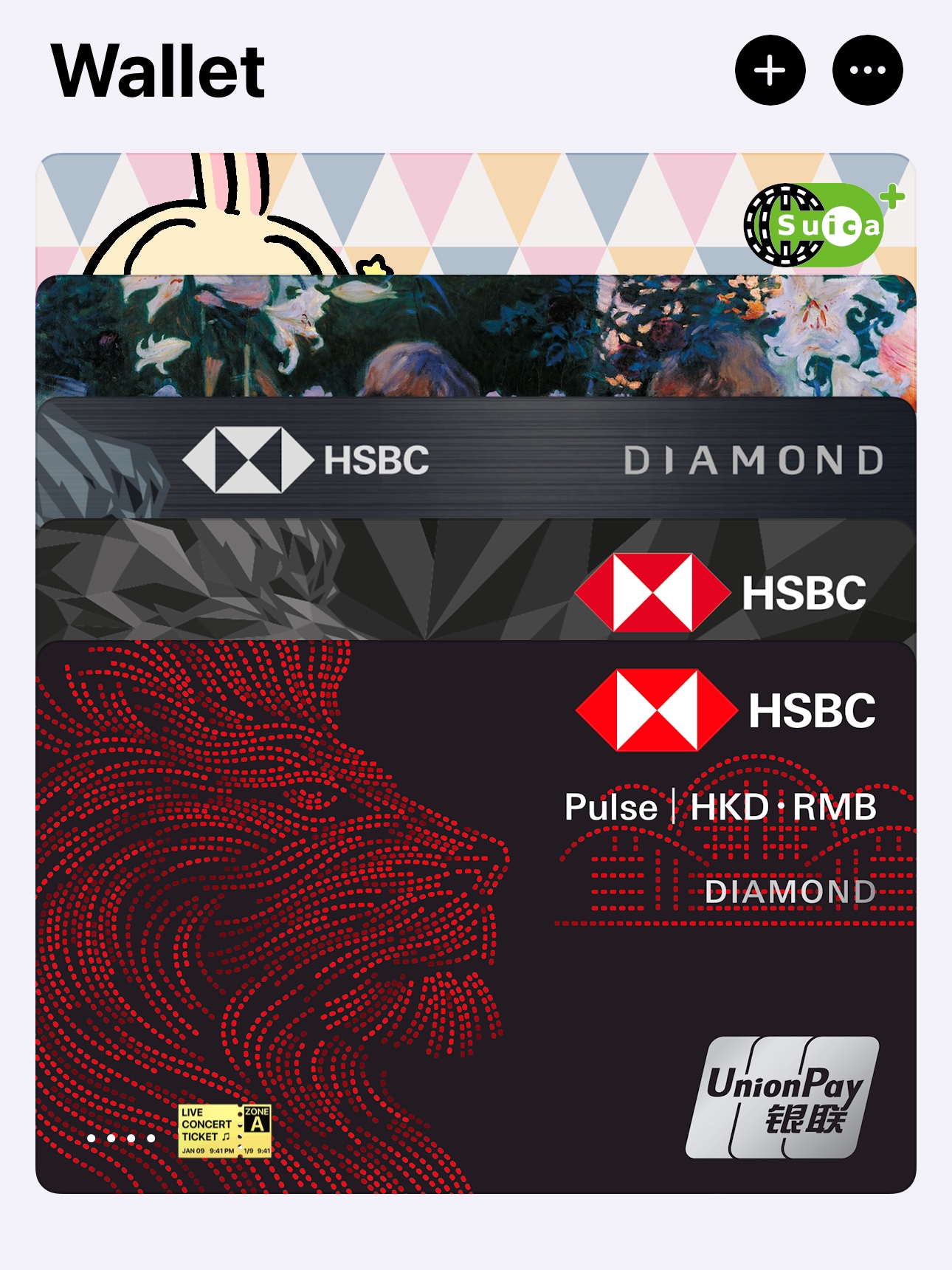
If you want to maximise cashback, I’d recommend considering opening an HSBC Hong Kong account and applying for their UnionPay Dual Currency Diamond Credit Card, which offers 4.4% cashback on eligible spending.[^2](plus it looks so good)
Financial Systems Vary from Country to Country
Each country and bank has its own set of financial rules and policies, and it can be quite confusing. What I’ve shared here is based on my own research and feedback from other travellers — it might not be 100% accurate, so feel free to share any updates or corrections in the comments.
Both UnionPay and Alipay are expanding their reach across the Asia-Pacific region and often offer discounts, even outside of China. Once set up, they can also be useful when travelling to other parts of Asia.
For example, this year I travelled to Cambodia and discovered that local ABA Bank QR codes also accept Alipay — incredibly convenient.
Hope you have a lovely time in China. 🇨🇳
Cheers!
[^1]: It’s also a good idea to link a debit card. Credit cards are not widely used in China, and some smaller vendors may only accept debit cards.
[^2]: to get approved for this card, you’ll typically need to maintain at least $10,000 USD on deposit with the bank
Leave a Reply